


 English
 русский
 Español
 عربى
عربىQuick Answer: Curtain wall embedded parts are steel anchoring components cast into a building's structural frame—concrete slabs, beams, or columns—that provide the fixed connection points for hanging a curtain wall facade. Without them, the curtain wall system has no reliable load transfer path to the structure. Curtain walls are indeed a type of facade: a non-load-bearing outer skin of glass, metal, or stone that encloses the building envelope without carrying floor or roof loads.
What Are Curtain Wall Embedded Parts?
Embedded parts (also called embed plates, anchor plates, or cast-in anchors) are prefabricated steel assemblies positioned inside formwork before concrete is poured. Once the concrete cures, the plates are permanently locked into the structure, with a flush or slightly proud face exposed at the slab edge or column surface. Curtain wall brackets and mullion connectors are then welded or bolted to these plates during facade installation.
A typical embedded part assembly consists of:
- Anchor plate: A flat steel plate, commonly 150×150 mm to 300×300 mm, in thickness ranging from 10 mm to 20 mm depending on design loads.
- Headed studs or rebar anchors: Welded to the back face of the plate, projecting into the concrete to develop tensile and shear capacity. Stud diameters of 13 mm, 16 mm, and 19 mm are most common in curtain wall applications.
- Position loops or locating bars: Tie-wire hooks or rebar frames that hold the assembly at the correct elevation and alignment within the rebar cage before and during the pour.
- Corrosion protection: Hot-dip galvanizing (minimum 85 µm per ISO 1461) or stainless steel (grade 304 or 316) for coastal and high-humidity environments.
Tolerances are critical. Most curtain wall systems allow ±6 mm positional tolerance on the embedded plate face. Errors beyond this range require shimming, slotted connection hardware, or costly remedial grouting.
Is a Curtain Wall a Facade?
Yes. A curtain wall is a specific type of building facade—one that is entirely non-load-bearing and suspended from, or attached to, the primary structural frame. The term "facade" covers all exterior cladding systems, including load-bearing masonry walls, precast concrete panels, and rainscreen cladding. A curtain wall is distinguished by:
- No structural role: It carries only its own self-weight and transfers wind, seismic, and thermal loads to the frame through anchor points. Floor and roof loads bypass it entirely.
- Continuous glazed or panelized skin: Unitized or stick-built aluminum framing holds glass, metal spandrel panels, or stone cladding in a grid system that wraps the building face.
- Full-height spans: Curtain wall panels typically span from floor to floor (3–5 m story heights) or from floor to two stories, transferring gravity load at each slab connection.
The distinction matters for engineering: a load-bearing facade wall must be sized for compressive stress, whereas a curtain wall connection must be designed only for tension (pull-out from wind suction), shear (wind pressure and self-weight), and thermal movement accommodation.
What Was the Curtain Wall Used For Historically?
The term "curtain wall" originated in medieval fortification architecture. In castle design, a curtain wall was the high perimeter wall connecting defensive towers, designed to deny entry to attackers rather than to support a roof. It carried no structural load from the castle's interior—its only purpose was enclosure and defense.
The modern architectural meaning emerged in the late 19th and early 20th centuries as steel frame construction made masonry bearing walls unnecessary for tall buildings. Key milestones include:
- 1851 – Crystal Palace, London: Joseph Paxton's prefabricated cast-iron and plate-glass structure demonstrated that an entire building envelope could be a lightweight, non-structural skin.
- 1917–1922 – Hallidie Building, San Francisco: Often cited as the first true glass curtain wall on a multi-story building, with a glass facade suspended entirely from the concrete frame.
- 1950s – Lever House and Seagram Building, New York: Mies van der Rohe and SOM established the all-glass curtain wall as the defining aesthetic of corporate modernism, triggering global adoption.
- 1970s–present: Unitized curtain wall systems (factory-assembled floor-to-floor panels) replaced labor-intensive stick-built systems for high-rise construction, reducing on-site installation time by 30–50%.
Today, curtain walls are used primarily to maximize natural daylighting, reduce building weight, accelerate construction schedules, and achieve contemporary architectural expression on commercial, institutional, and residential high-rise buildings.
Why Are Curtain Walls Important?
Curtain walls serve multiple critical functions simultaneously, which explains their dominance in modern commercial construction:
| Function | Practical Significance | Typical Performance Metric |
|---|---|---|
| Weather barrier | Prevents water ingress and air infiltration across the entire building envelope | Air leakage ≤0.3 L/s·m² at 75 Pa (ASTM E283); water resistance tested to 300–600 Pa (ASTM E331) |
| Thermal performance | Controls heat gain/loss; thermally broken aluminum framing reduces conductive heat loss | U-values of 1.0–1.6 W/m²K for double-glazed units; triple glazing achieves 0.6–0.8 W/m²K |
| Wind load resistance | Transfers positive and negative wind pressures to the structural frame via embedded connections | Design wind pressures of 1.0–3.5 kPa typical for mid- to high-rise buildings |
| Seismic accommodation | Allows inter-story drift without glass cracking or panel ejection during earthquakes | Drift accommodation of 10–50 mm depending on system and seismic zone |
| Daylighting | Maximizes visible light transmission; reduces artificial lighting energy consumption | Visible Light Transmittance (VLT) of 40–70% for typical high-performance glazing |
| Construction speed | Unitized panels installed rapidly from inside the building without exterior scaffolding | Unitized systems can achieve 400–600 m²/week installation on large projects |
| Acoustic performance | Reduces external noise penetration in urban environments | Sound Transmission Class (STC) of 35–45 for standard double-glazed curtain wall units |
Do Curtain Walls Need Wall Anchors?
Yes—anchoring is the fundamental structural requirement of any curtain wall system. Because the curtain wall carries no building loads itself, every wind force, gravity load from the panel's self-weight, and seismic inertia force must be transferred to the structural frame through discrete anchor points. There are no exceptions to this requirement.
Types of Curtain Wall Anchor Systems
- Cast-in embedded plates (most common): Installed in formwork before concrete placement. Provide the highest load capacity and most reliable positional accuracy. Load capacities of 20–100 kN in tension and shear are achievable depending on stud size and pattern.
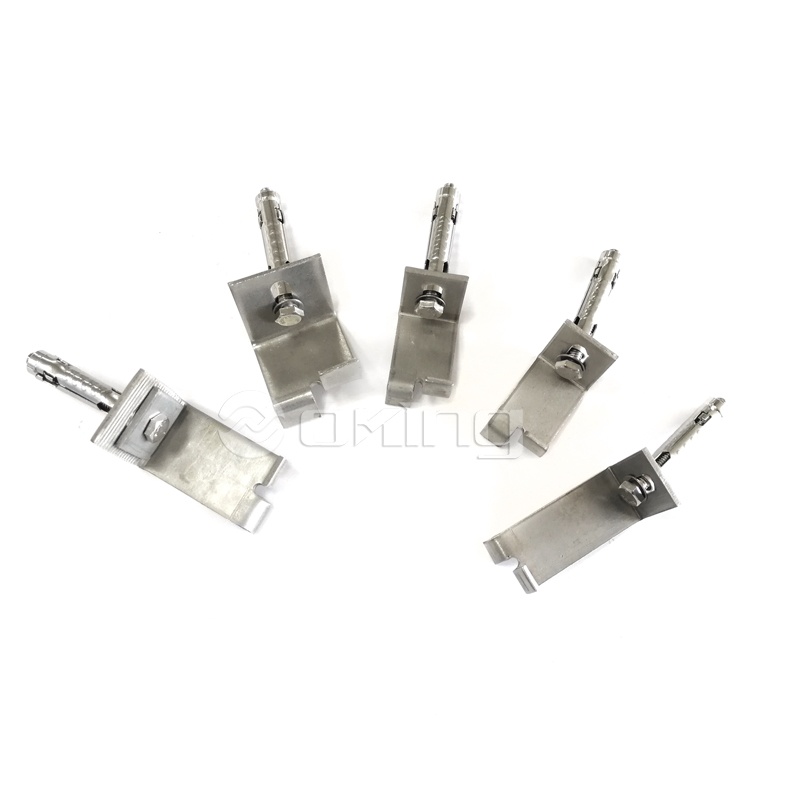
- Post-installed anchors: Expansion or chemical (epoxy) anchors drilled into hardened concrete after construction. Used where embedded plates were missed, mislocated, or not specified. Chemical anchors in ≥C25/30 concrete can achieve tensile capacities of 15–60 kN per anchor, but require careful hole cleaning and cure time management.
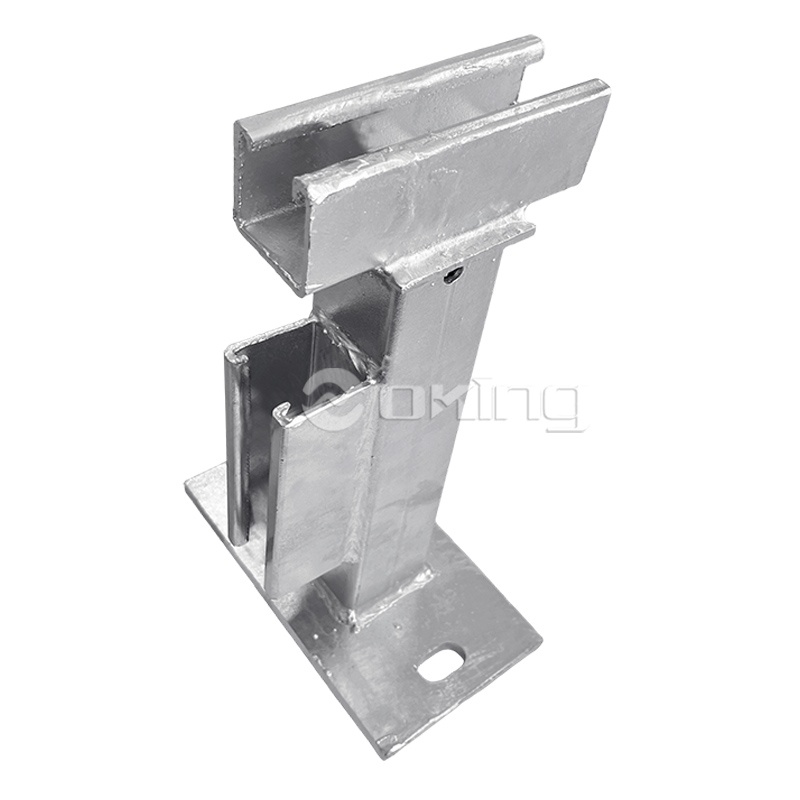
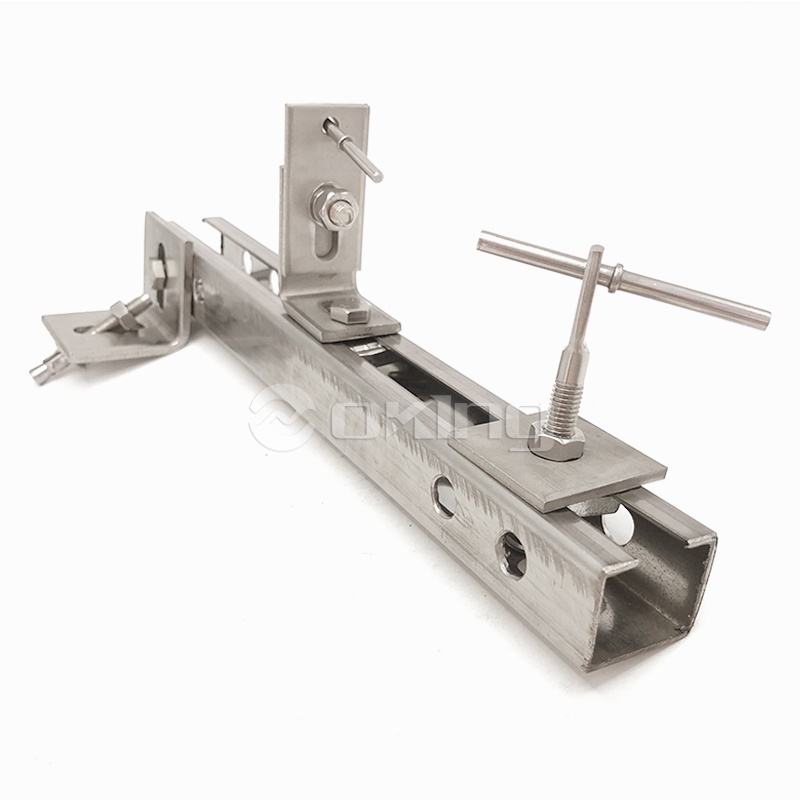
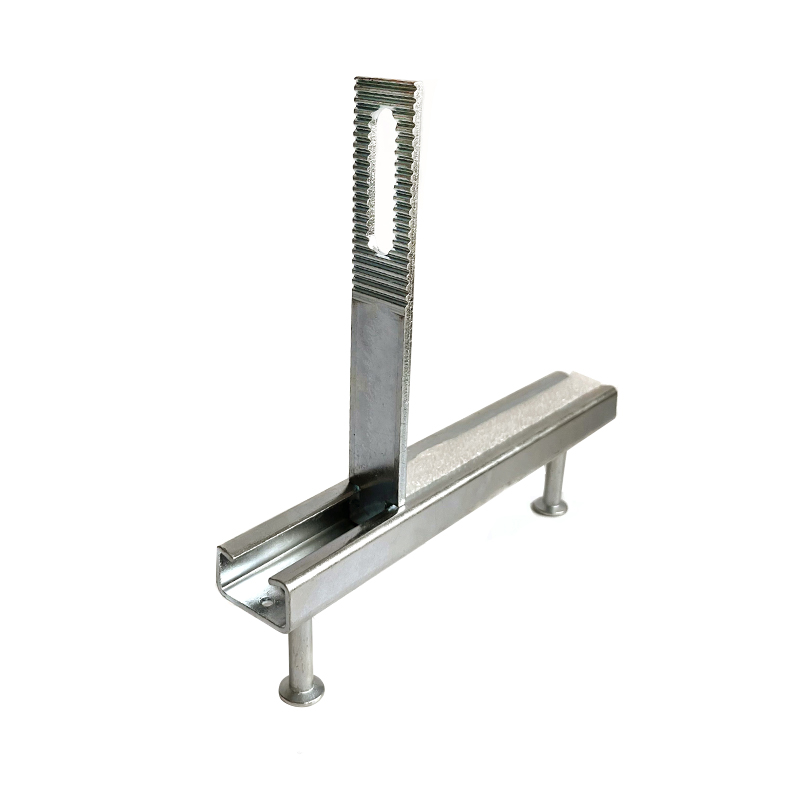
- Cast-in channel systems (Halfen, Jordahl type): Continuous slotted channels cast into the slab edge, allowing bolt-in T-head connectors to be positioned anywhere along the channel length. Provide exceptional installation flexibility—±50 mm or more of horizontal adjustment without drilling.
- Undercut anchors: Mechanically interlocked into a flared hole profile; used in thin slabs or post-tensioned structures where drilling depth is limited and conventional expansion anchors are restricted.
What Loads Must Curtain Wall Anchors Resist?
- Dead load (gravity): The self-weight of glass, aluminum framing, and spandrel infill—typically 30–80 kg/m² for standard unitized systems—transfers to the slab through bearing anchors at the bottom of each unit.
- Wind load (lateral): Both positive pressure (pushing the facade inward) and negative pressure, or suction (pulling it outward), must be resisted. Corner zones of tall buildings can see wind pressures 1.5–2× higher than the field of the facade.
- Thermal movement: Aluminum expands at 23 × 10⁻⁶/°C—a 6 m tall panel can move ±7 mm over a 50°C temperature range. Anchor designs must allow this movement through slotted holes or sliding connections, otherwise thermal stress cracks glass or buckles mullions.
- Seismic drift: Inter-story racking during an earthquake causes relative horizontal movement between floors. Anchors must allow this drift (often 10–40 mm) without binding while still maintaining wind and gravity load capacity.
How Embedded Parts Connect to the Curtain Wall System
The embedded plate is only the first component in a multi-part load path. The complete connection typically comprises:
- Embedded plate: Cast into the slab or beam; provides the weld or bolt base surface.
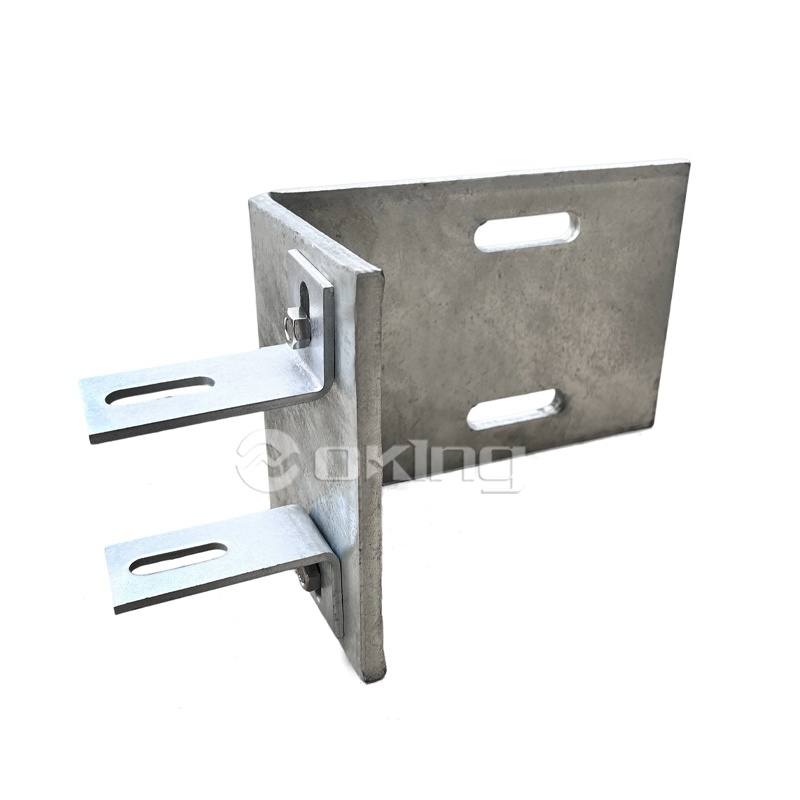
- Steel bracket or clevis: Welded or bolted to the embedded plate on-site; transfers load from the curtain wall back to the plate. Brackets are usually designed with three-axis adjustability (±25 mm in each direction) to compensate for concrete construction tolerances.
- Aluminum transom or sill connector: Bolts to the steel bracket; transitions from structural steel to the aluminum curtain wall framing system.
- Thermal break: A polyamide or fiberglass isolator between the steel bracket and the aluminum framing prevents conductive heat loss and condensation on the interior bracket face.
Fire protection is also a design consideration: steel brackets passing through or adjacent to a fire-rated floor assembly typically require intumescent coatings or mineral wool packing to maintain the floor's fire separation rating, which is commonly 60–120 minutes in commercial construction.
Common Failures Caused by Poor Embedded Part Installation
Failures in curtain wall anchoring almost always t




Contact Us