-
 Tel:
+86-15996094444
-
 E-mail:
INQUIRE NOW
+86-15996094444
INQUIRE NOW

Article Directory
Shortlisting a facade cladding system supplier without a complete request for quotation is the most expensive shortcut in facade procurement. On a coastal commercial project, a contractor compared three near-identical quotes for natural stone cladding brackets and chose the lowest price; the parts arrived in zinc-plated steel instead of the 304 stainless grade in the structural drawings, and rust staining appeared within six years. Jiangsu Aozheng Metal Products Co., Ltd., a manufacturer of cast-in anchor channels, cladding support brackets, undercut anchors, and precast concrete fixing accessories, sees this pattern repeat whenever an RFQ omits technical parameters. This article defines the measurement points that belong in every facade cladding system RFQ, from load values and material grades to adjustment tolerances and documentation requirements.
An RFQ is the technical contract baseline of a cladding package. Every parameter you omit is a decision your supplier will make for you, usually in the direction of lower manufacturing cost.
Manufacturing departments can only produce what the quotation document defines. If the RFQ does not state a stainless steel grade, the supplier will price the grade that wins the order, not the grade the building needs. The same logic applies to bracket geometry, coating thickness, test reports, and packaging.
Load values must be written as numbers with units, not as qualitative descriptions such as heavy or standard. The RFQ has to state which resistance is requested: characteristic strength or design resistance, and under which safety factor.
Dead load includes the complete panel weight, bracket self-weight, and any insulation build-up behind the cladding. Wind load, frequently the governing load on high-rise facades, must be given as pressure or suction in kilopascals for each facade zone. Seismic and thermal movement requirements decide whether the support system needs slotted holes or sliding connections. Deflection limits, often expressed as a fraction of the span such as L/200, protect the panel joint geometry.
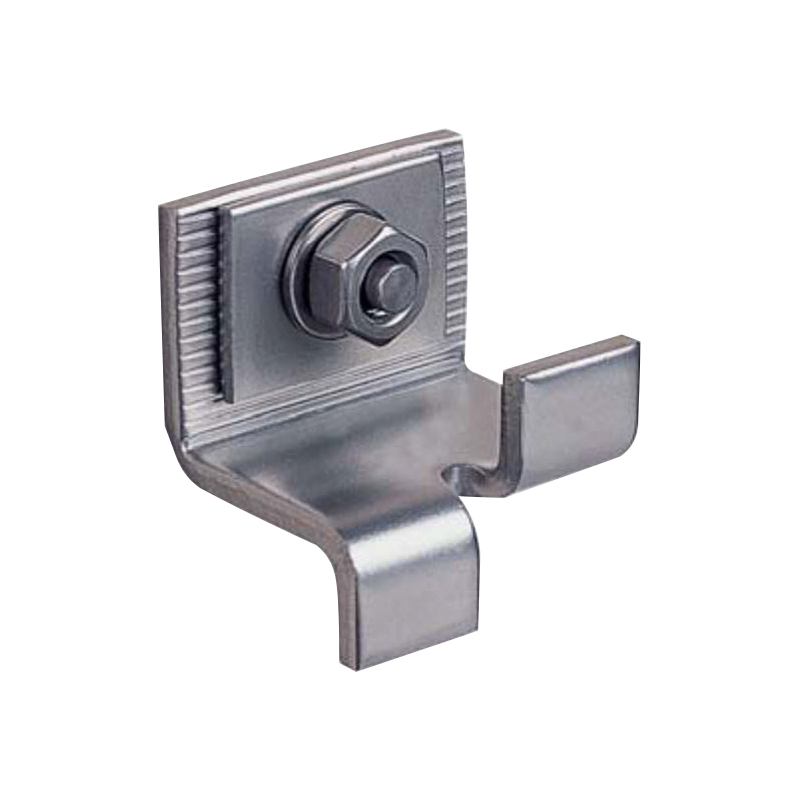
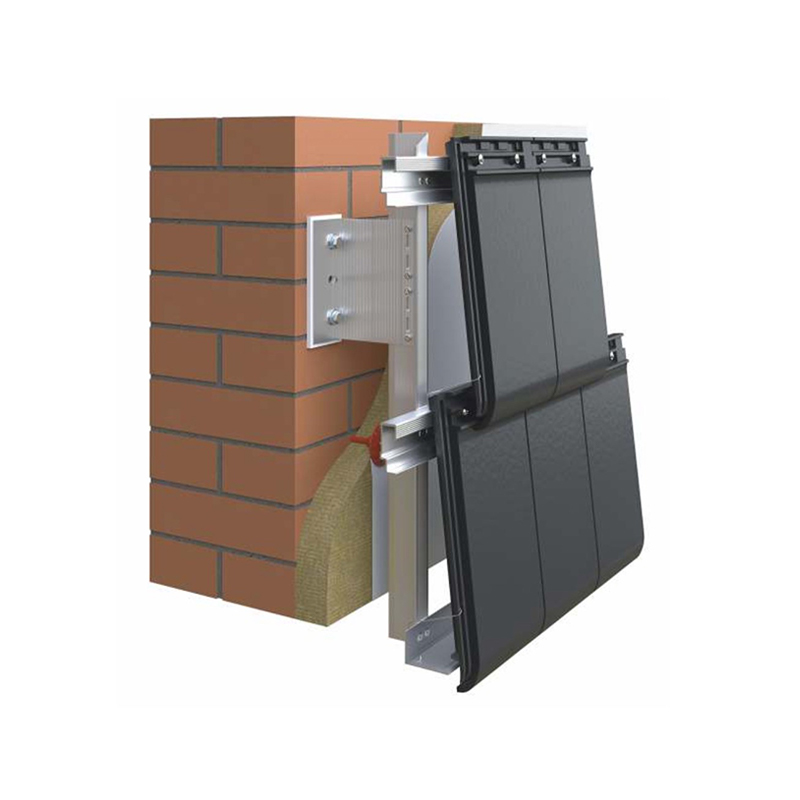
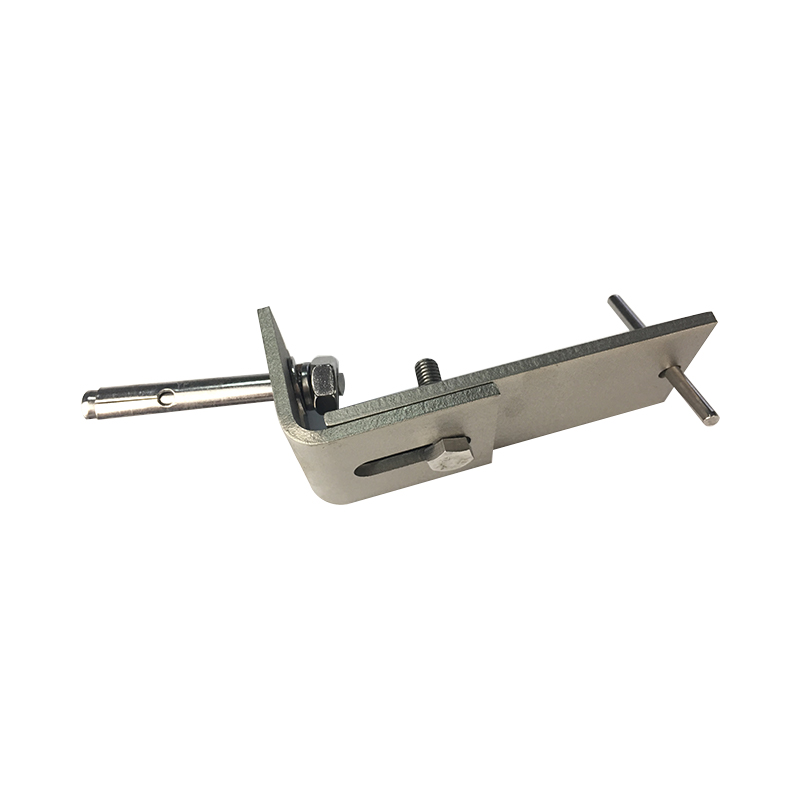 Stainless Steel Adjustable L Angle Bracket for Cladding SystemsPrecision-engineered 3-axis adjustable bracket for ventilated facades, available in AISI 304 or 316L, load-rated up to 12 kN, compensates for substrate irregularities and thermal movement.View Product →
Material grade is a durability commitment. Postponing this decision until after the RFQ stage almost guarantees substitution, because price pressure pushes the supplier toward the cheapest alloy or coating that still satisfies the written words.
Stainless steel grades 304 and 316 are the two most common choices for facade cladding brackets and anchor channels. Grade 316 adds molybdenum, which improves chloride resistance and makes it the default for coastal and de-icing-salt environments. Hot-dip galvanized (HDG) steel typically carries a zinc coating of 70 to 85 micrometers and suits industrial or low-moisture inland projects. Zinc-plated electro-galvanized parts are intended mainly for interior or temporarily protected conditions and rust quickly in facade humidity cycles.
| Protection option | Typical facade position | Corrosion behavior | Key RFQ values |
| Zinc plated (electro-galvanized) | Interior or dry-protected zones | Low; corrosion appears quickly in humid air | Coating thickness and test method |
| Hot-dip galvanized (HDG) | Inland, industrial, low-moisture zones | Good; zinc coating of 70-85 micrometers typical | Zinc mass in grams per square meter and coating thickness |
| 304 stainless steel | Urban, inland, sheltered coastline | Very good; pitting possible in chloride exposure | Grade certificate and surface finish |
| 316 stainless steel | Coastal facades, splash zones, tunnels | Excellent; designed for permanent chloride exposure | Grade certificate, molybdenum content, and finish |
Material selection should be checked against the exposure zone before the envelope is tendered. A practical guide to choosing stainless steel cladding brackets translates exposure conditions into grade decisions and load checks.
Geometry decides whether a bracket can be installed at all. Adjustment range decides whether it can be aligned on site.
Panel thickness controls the slot width or kerf depth of the support. Natural stone panels from 20 to 30 millimeters, ceramic tiles from 10 to 18 millimeters, and aluminum composite panels from 3 to 6 millimeters each need a different grip range. The RFQ should also state the bracket leg length, slot pitch, and compatibility of threaded parts with the selected anchor channel or T-bolt. Cast-in positions are never perfect, so specify the required adjustment range in both the vertical and horizontal axes in millimeters, and confirm whether the bracket provides it through slotted holes or threaded inserts.
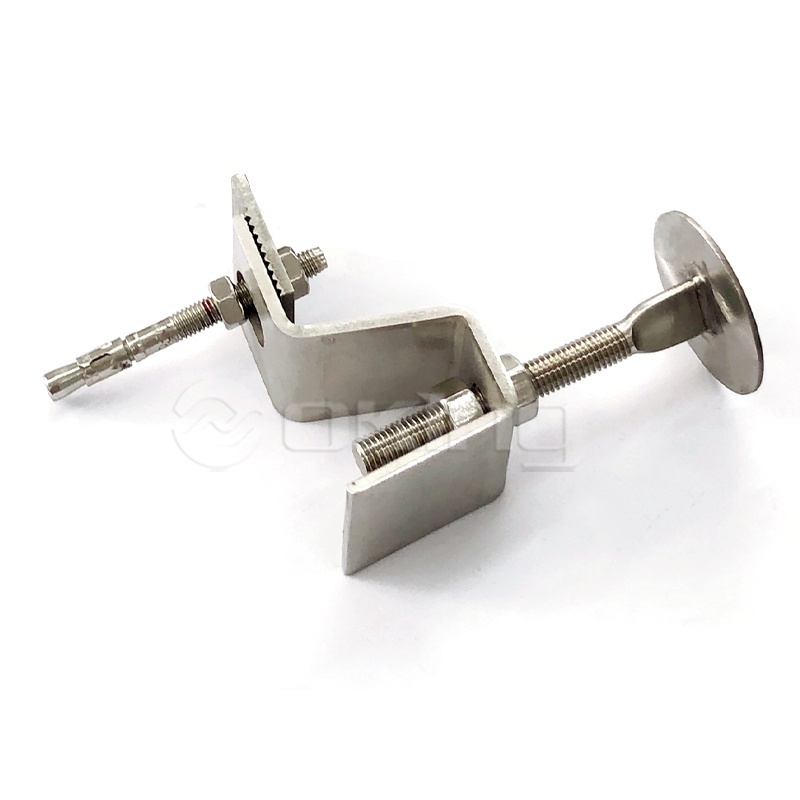 Stainless Steel Z Anchor for Stone Curtain Wall SystemsInterlocking Z-shaped brackets provide secure attachment for stone and tile cladding, withstanding wind loads and seismic forces. Suitable for uneven substrates requiring field adjustment.View Product →
Cast-in and post-installed fixation systems answer different structural questions. The RFQ must state which system the design assumes, because replacing one with the other changes load behavior, edge distances, and installation sequence.
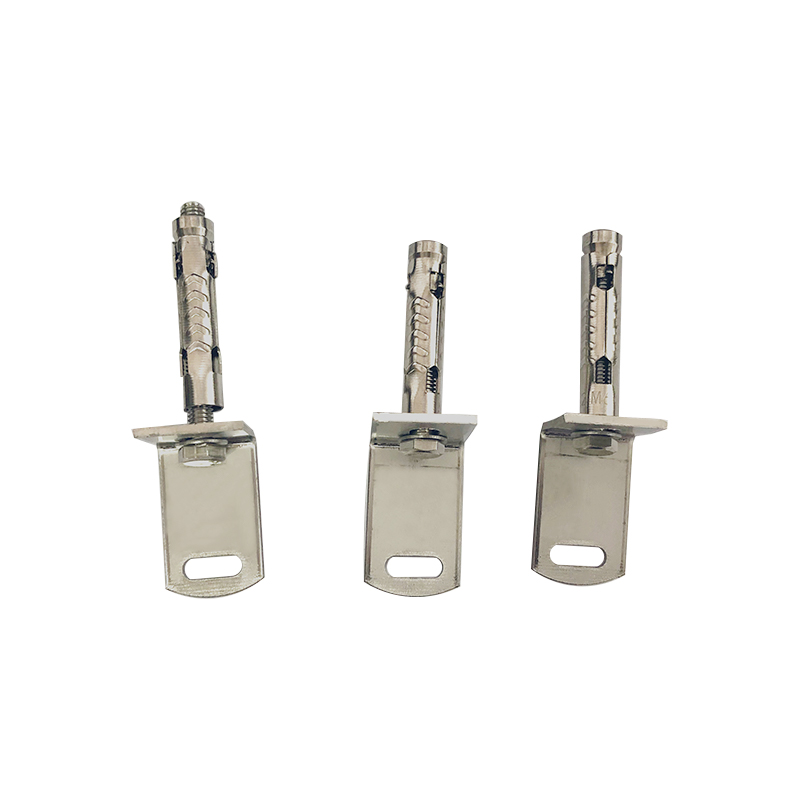
Cast-in anchor channels are embedded in concrete before pouring and are the preferred solution for heavy stone, terracotta, and precast concrete facades. Post-installed expansion, undercut, and chemical anchors are added later; undercut anchors are the usual choice for cracked concrete and seismic areas. The RFQ should name the concrete strength class, for example C25/30, the member thickness, the edge and spacing distances, and the required performance category for cracked or uncracked concrete.
 Hot Dip Galvanized Cast-In Anchor ChannelEmbedded channel for heavy facades, available in hot-rolled and cold-rolled profiles with various sizes and load ratings. Suitable for cracked concrete and seismic regions, providing adjustable anchoring.View Product →
Channel selection depends on the profile type, material, and anchoring geometry. Guidance on how to choose a cast-in anchor channel covers hot-rolled versus cold-rolled differences and the selection criteria that belong in your RFQ.
A quotation without material certificates and test reports is a price, not a proposal. The RFQ should list the documents that prove the product will behave as quoted and make their delivery a condition of acceptance.
Traceability links the delivered batch to its production date and material history. Without it, a failed anchor cannot be identified or inspected while the facade is still in service.
A complete RFQ is the cheapest quality control instrument on a facade project. It converts an architectural idea into enforceable supplier obligations and prevents the material and geometry substitutions that cause most cladding failures.
Material grade and adjustment tolerance are the two most common omissions. Many RFQs name a bracket type but not the stainless steel grade or the allowed on-site adjustment range, leaving suppliers free to quote parts that are cheaper to make instead of parts that match the structure.
Every bracket needs a defined material decision, but the answer is not always stainless steel. Hot-dip galvanized brackets can be technically adequate in dry inland conditions, while coastal and industrial facades normally require 304 or 316 stainless. The RFQ must state the grade explicitly so that all quotes are compared on the same basis.
Ask for the basis of the stated values. A reliable RFQ response includes a test report, a calculation note, or the standard the product was tested to, and it clearly distinguishes characteristic values from design resistance. If a supplier cannot provide this evidence, treat the quoted load value as unverified.
The profile type (hot-rolled or cold-rolled), material grade, channel length, anchoring detail, compatible T-bolt size, load direction and edge distances, concrete strength class, and corrosion protection. Together these parameters determine whether the channel can be installed and anchored with the resistance the design expects.

We will wholeheartedly provide you with high quality products, reasonable price, on-time delivery and attentive service.
Maoshan Taiwan Business Industrial Park, Dinan Town, Xinghua City, Jiangsu Province, China

+86-523-82799922

+86-15996094444

+86-523-82799933


Copyright © Jiangsu Aozheng Metal Products Co., Ltd. All Rights Reserved.
 English
 русский
 Español
 عربى


Contact Us