-
 Tel:
Tel:+86-15996094444
-
 E-mail:
INQUIRE NOW
+86-15996094444
INQUIRE NOW

Article Directory
Choosing the right T/L profile determines the structural integrity, installation speed, and long-term cost of any framing, enclosure, or support project. Whether you are building industrial racking, architectural facades, machine guards, or modular furniture, the geometry, material grade, and dimensional accuracy of your T/L profile will define the outcome. This guide answers the four critical questions engineers and buyers ask before specifying profiles for a new build.
The T profile and L profile serve fundamentally different structural roles. Selecting the wrong geometry adds unnecessary material cost or forces expensive rework on site.
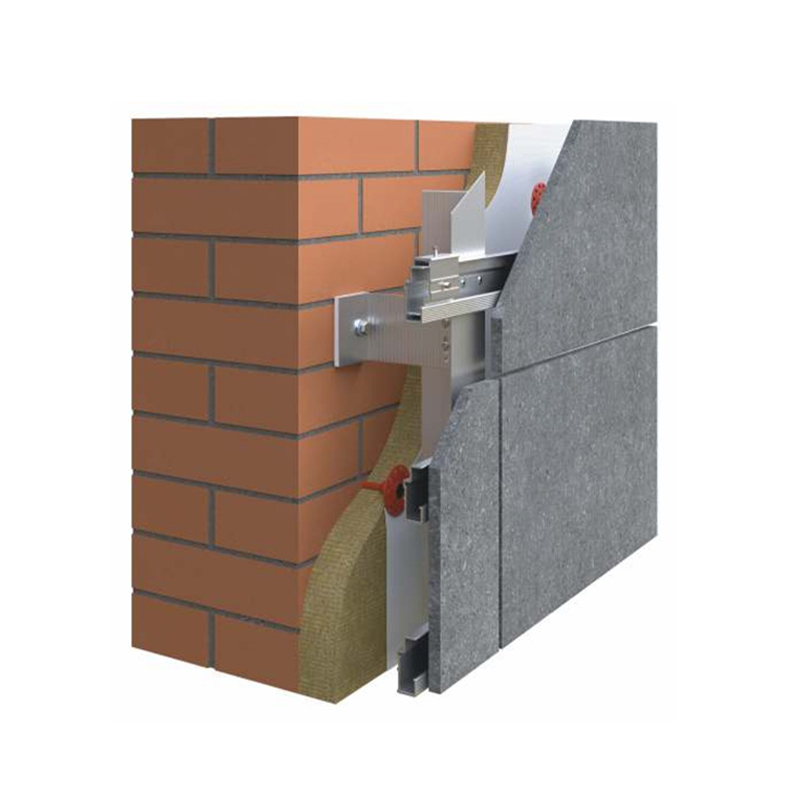
For projects with primarily linear spanning loads — overhead rails, structural ties, or facade supports — the T profile delivers superior stiffness. For corner connections, edge protection, and bracket applications, the L profile reduces both material and fabrication time.
Aluminum alloy is the dominant material for T/L profiles in modern construction and manufacturing, but the alloy grade, temper, and surface finish each affect performance significantly.
| Material / Grade | Yield Strength | Corrosion Resistance | Best Application |
| Aluminum 6061-T6 | 276 MPa | Good (anodize recommended) | Structural frames, machine guards, load-bearing brackets |
| Aluminum 6063-T5 | 145 MPa | Excellent (natural anodize) | Architectural trim, facade framing, decorative enclosures |
| Stainless Steel 304 | 215 MPa | Excellent (no coating needed) | Food processing, marine, chemical environments |
| Mild Steel (S235) | 235 MPa | Low (paint or galvanize needed) | Heavy industrial, high-load structural supports |
| UPVC / Rigid Polymer | 45 – 55 MPa | Excellent (inherent) | Electrical enclosures, light-duty trim, window framing |
Aluminum 6063-T5 extrusions accept anodizing to a thickness of 10 – 25 microns, producing a surface hardness exceeding 400 HV — harder than stainless steel surface skin — without adding measurable weight. This makes it the preferred T/L profile material wherever both aesthetics and corrosion resistance are specified.
Incorrect measurement is the most common source of fitment errors when ordering T/L profiles. Each geometry has its own dimensional reference convention that differs from standard flat bar measurement.
| Leg x Leg (mm) | Thickness (mm) | Weight (kg/m) | Moment of Inertia (cm4) |
| 20 x 20 | 2.0 | 0.21 | 0.19 |
| 30 x 30 | 3.0 | 0.48 | 0.68 |
| 40 x 40 | 3.0 | 0.65 | 1.61 |
| 50 x 50 | 4.0 | 1.09 | 3.58 |
| 60 x 60 | 5.0 | 1.62 | 7.20 |
| 80 x 80 | 6.0 | 2.58 | 19.6 |
Installation labour consistently accounts for 40 – 60% of total project cost for structural framing. The right T/L profile specification directly cuts that figure through three mechanisms.
Aluminum T/L profiles up to 3 mm wall thickness can be cleanly cut with a fine-tooth hand saw or angle grinder with an aluminium-rated disc. For wall thicknesses of 4 mm and above, a mitre saw with a non-ferrous blade at 3,500 – 4,500 RPM delivers the cleanest cut face and avoids the burring that hand tools produce on thicker sections. Deburr all cut edges before installation to prevent installer injury and ensure full contact with mating surfaces.
Extruded profiles are produced by forcing heated aluminum billet through a die, resulting in consistent wall thickness, sharp internal radii, and close dimensional tolerances (typically plus or minus 0.1 – 0.2 mm). Roll-formed profiles are produced from flat sheet bent through progressive rollers — faster and cheaper for high volumes, but with slightly looser tolerances (plus or minus 0.3 – 0.5 mm) and a minimum inside radius equal to the material thickness. For precision-fit applications, specify extruded; for cost-sensitive high-volume work, roll-formed performs adequately.
The standard mechanical joining method uses internal corner brackets (also called angle brackets or gusset plates) fastened with M5 or M6 socket head cap screws into pre-tapped holes or T-slot nuts. For aluminum profiles in the 20 – 60 mm range, this joint achieves 70 – 85% of a welded joint's rigidity without heat distortion, and allows the structure to be disassembled and reconfigured. Adhesive bonding with structural epoxy adds rigidity for permanent joints that still avoid welding.
Standard finishes include mill finish (uncoated, lowest cost), clear anodize (10 – 25 micron oxide layer, silver appearance), colour anodize (bronze, black, gold, or custom RAL tones), powder coat (60 – 80 micron polymer layer, full RAL colour range), and PVDF coating for exterior architectural use. Anodize is the most cost-effective finish for interior structural applications; powder coat is preferred where colour matching to RAL specifications is required; PVDF is specified for facades exposed to UV and salt spray environments.

We will wholeheartedly provide you with high quality products, reasonable price, on-time delivery and attentive service.
Maoshan Taiwan Business Industrial Park, Dinan Town, Xinghua City, Jiangsu Province, China

+86-523-82799922

+86-15996094444

+86-523-82799933


Copyright © Jiangsu Aozheng Metal Products Co., Ltd. All Rights Reserved.
 English
 русский
 Español
 عربى
عربى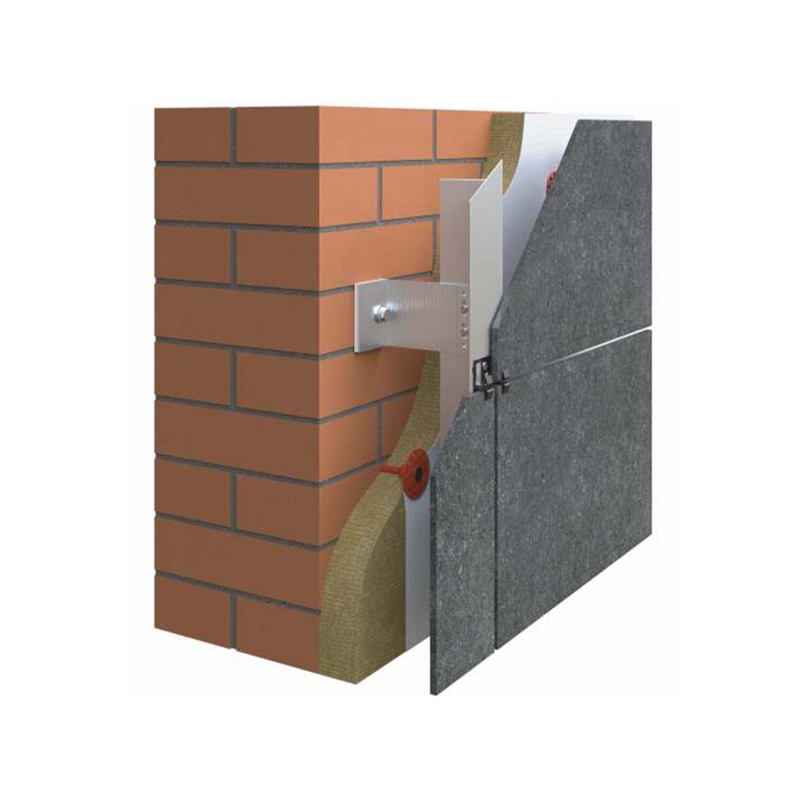


Contact Us