-
 Tel:
+86-15996094444
-
 E-mail:
INQUIRE NOW
+86-15996094444
INQUIRE NOW

Article Directory
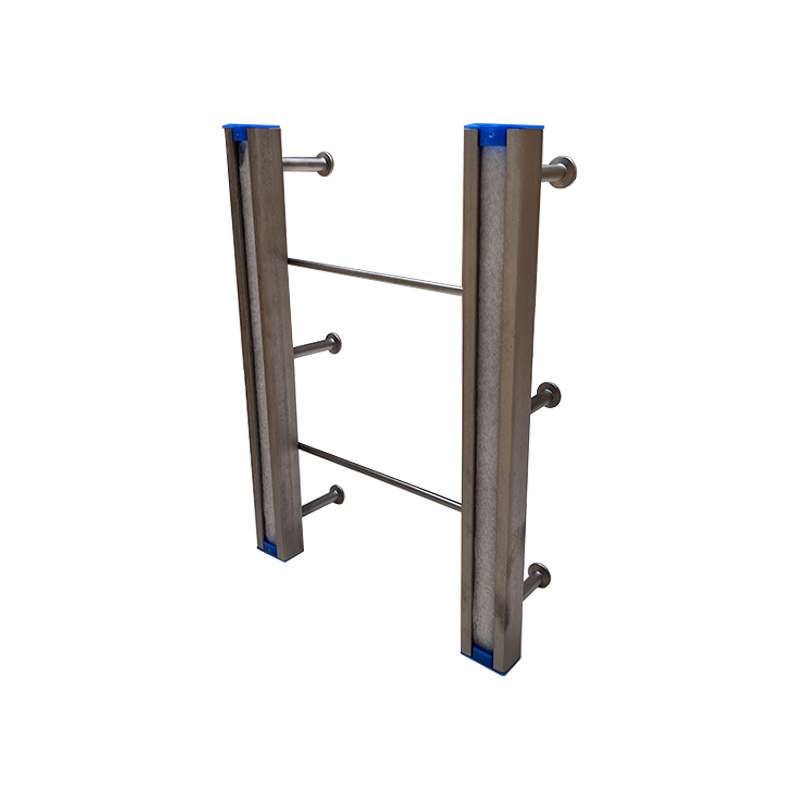
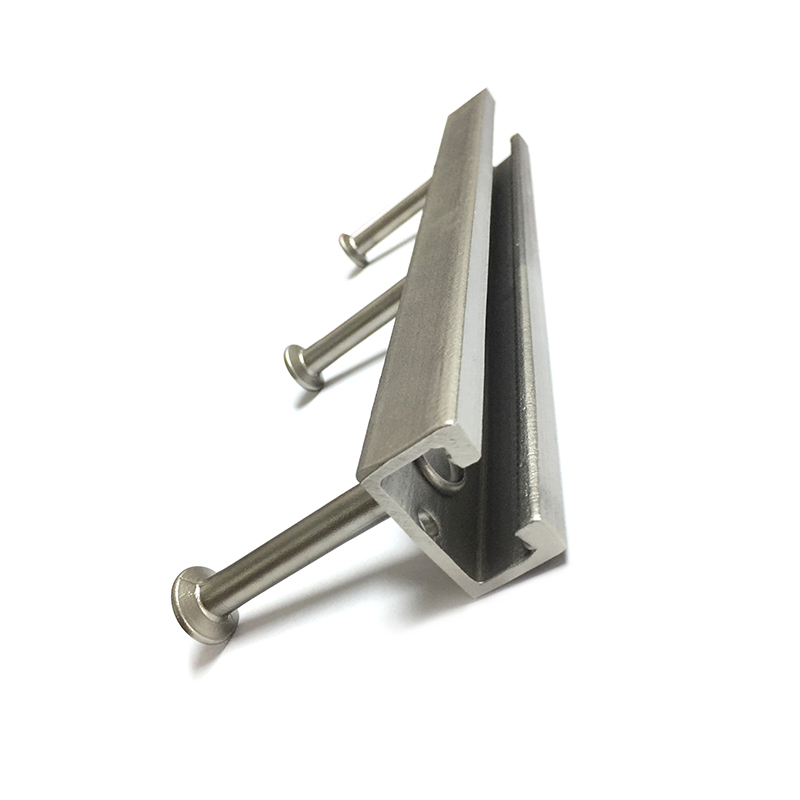
An anchor channel is a C-profile with welded anchors cast into concrete before the pour, leaving an open slot so T-bolts can be positioned anywhere along its length once the formwork comes down. Because the profile becomes part of the structure, the choice is locked at the precast yard or the formwork table, months before a bracket, mullion or cable tray is offered up to it. Six factors decide whether that early decision still holds at handover.
Anchor channel capacity is verified to EN 1992-4:2018, with characteristic resistances taken from a European Technical Assessment (ETA) and combined according to EOTA TR 047. In façade, precast and services work, the concrete failure modes rather than the steel usually set the limit.
Five checks govern a single T-bolt position: steel rupture of the bolt, pull-out of the welded anchor, concrete cone failure, pry-out under shear, and concrete edge breakout. Edge breakout is the one that surprises project teams, because a profile that performs well in the middle of a slab loses capacity quickly as it approaches a free edge, a corner or a service opening.
Ask for the assessment number and the option quoted, the characteristic tension and shear values per failure mode, the minimum member thickness, and the minimum edge and spacing distances. A quotation without those four items cannot be checked against the structural calculation. If you are still weighing a cast-in channel against a drilled anchor, this comparison of cast-in channels and traditional anchoring systems sets out where each system wins.
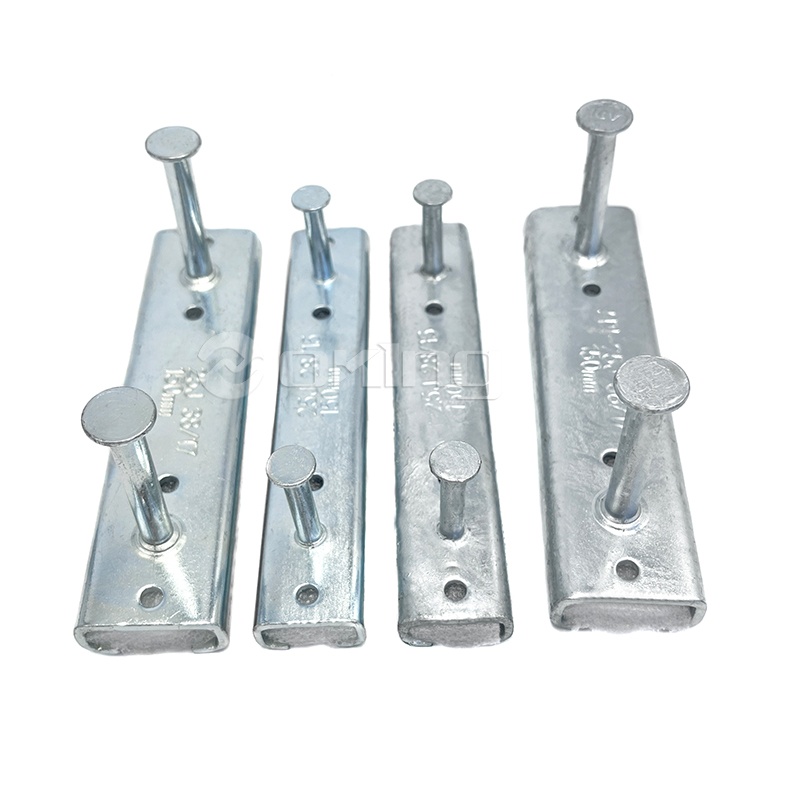
The first number in a channel designation is the internal width in millimetres and the second is the internal depth, so a 49/30 channel occupies 30 mm of profile depth plus the concrete cover behind its anchors. That depth, not the load table, is what limits how thin a precast panel, slab or spandrel can be.
| Profile | Internal width | Internal depth | Typical fit |
| 28/15 | 28 mm | 15 mm | Thin precast panels, secondary fixings, cable and pipe support |
| 38/17 | 38 mm | 17 mm | Curtain wall brackets, stone and ceramic cladding, M10 to M12 bolts |
| 49/30 | 49 mm | 30 mm | Heavy façade loads, metro segments, tunnel linings, M16 to M20 bolts |
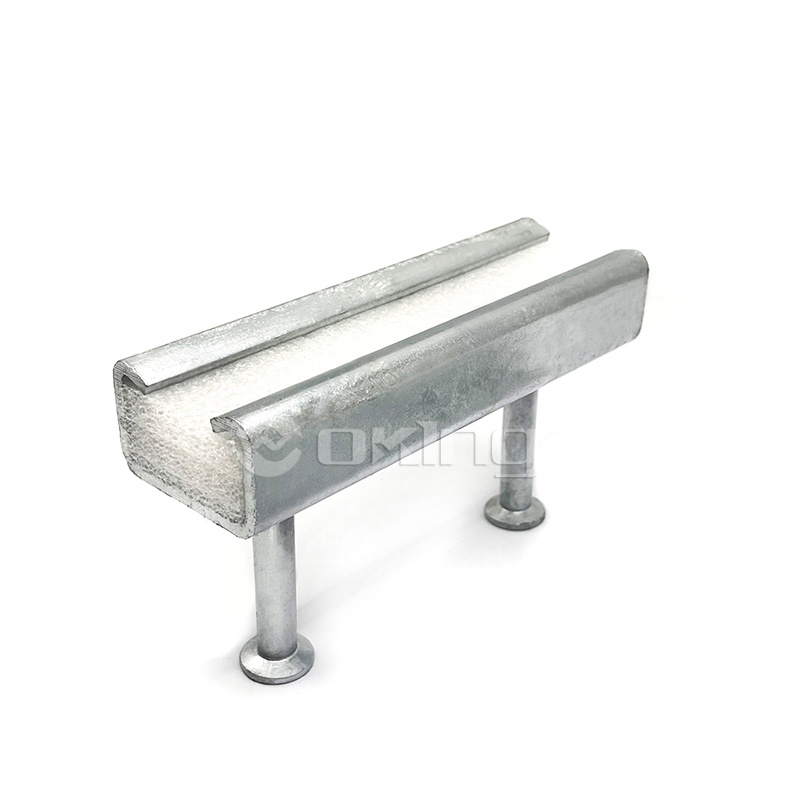 49/30 Galvanized Cold Rolled Cast-In Anchor ChannelThis 49/30 galvanized cold-rolled cast-in channel is relevant where 30 mm profile depth and exposure-related finish selection govern precast or curtain wall anchoring.View Product →
Finish selection follows the corrosivity category of the exposure in EN ISO 12944-2. C1 and C2 suit zinc-coated channel, C3 and C4 call for hot-dip galvanizing to EN ISO 1461, and C5, coastal or chloride-bearing interiors call for the stainless grades listed in EN 10088.
| Finish | Reference | Category | First failure mode |
| Electro-galvanized | EN ISO 2081 | C1 to C2 | Thin coating consumed at cut edges and weld spatter |
| Hot-dip galvanized | EN ISO 1461 | C3 to C4 | Coating thickness below the specified minimum on thin sections |
| Stainless 1.4301 | EN 10088 | C4, inland urban | Pitting where chlorides concentrate in the slot |
| Stainless 1.4401 | EN 10088 | C5, marine and industrial | Crevice attack if the slot is left full of debris |
 Hot Dip Galvanized Cast-In Anchor ChannelFor C3/C4 exposure where hot-dip galvanizing to EN ISO 1461 is specified, supporting facade, cladding, and concrete attachment anchoring.View Product →
Chloride exposure is the deciding variable on coastal work. A galvanized channel in a marine atmosphere at category C5 will not reach the design life stated in the durability plan, and recoating a slot after installation is not practical because the T-bolt has to slide through the coated surface.
 Stainless Steel Cast-In Anchor ChannelA stainless cast-in channel for coastal or chloride-bearing exposures, where system resistance depends on tested T-bolt sizes, grades, and engagement lengths.View Product →
An anchor channel and its T-bolt are assessed as one system, so the characteristic resistance in the report applies only to the bolt sizes, grades and engagement lengths tested with that profile.
Substituting an M12 hammer-head bolt for the M10 the calculation assumed does not add capacity; it removes the basis of the design. Serrated channels grip the bolt teeth to resist longitudinal slip, smooth channels rely on friction and a defined torque, and both behaviours change once a bracket introduces an eccentric lever arm. Property class 8.8 bolts to ISO 898-1 and stainless A4-70 bolts behave differently in the same slot, and the assessment states which one was tested.
A standard assessment does not automatically cover fire exposure or seismic action. The report must name the fire option evaluated to EOTA TR 020 and the seismic option evaluated to EOTA TR 045, or the corresponding resistance values cannot be used in the calculation.
Under fire, the steel T-bolt heats faster than the concrete around the channel, so the reduction in resistance is governed by the temperature at the bolt and by the cover to the profile. Under seismic action, the governing property shifts to displacement capacity: the channel must let the T-bolt move without the teeth shearing or the profile deforming, and ductility rather than raw tension capacity becomes the deciding number. Projects designed to ACI 318-19 Chapter 17 follow the same logic through a different route, and the qualification document rather than the datasheet is what proves it.
A cast-in channel absorbs construction deviation along its slot, but only when the filler stays in place, the anchors are fully embedded and the profile is held hard against the formwork while the concrete is vibrated.
Ask for three documents before comparing quotations: the European Technical Assessment with the option quoted, the Declaration of Performance issued under the Construction Products Regulation (EU) No 305/2011, and EN 10204 3.1 mill certificates traceable to the heat number of the steel.
Without them, the resistance values in the calculation cannot be traced to the goods on site, and a substitution at the factory stays invisible until someone audits the delivery. For bespoke layouts, a manufacturer that cold-rolls or welds to drawing holds the same profile across repeat orders, which is what keeps the second building of a scheme identical to the first. Jiangsu Aozheng Metal Products Co., Ltd. supplies cast-in channels in stainless steel, hot-dip galvanized and customized profiles, and the cast-in anchor channel range covers both standard and project-specific sections.
A 28/15 or 38/17 profile is the usual starting point for a 200 mm slab, because the profile depth plus the cover behind the anchors still fits between the top and bottom reinforcement. A 49/30 channel needs roughly 30 mm of depth plus that cover, so it normally belongs in 250 mm and thicker sections unless the assessment states a smaller minimum member thickness.
Stainless steel 1.4401 to EN 10088 for category C5 marine exposure. Hot-dip galvanizing to EN ISO 1461 is the correct choice for C3 and C4 inland work, but the salt load on a coastal site at C5 will consume a zinc coating well before a 50-year design life is reached.
Only if the assessment names that bolt. The characteristic slip and tension values were tested with specific bolt sizes, grades and engagement lengths, so an unnamed substitute at the same nominal size has no design resistance in that profile.
Usually the same profile with a fire option stated in the assessment to EOTA TR 020, but the supporting detail often changes: the concrete cover, the anchor embedment and the bolt grade may all need revising. A channel without the fire option cannot be used on the strength of its ambient resistance alone.

We will wholeheartedly provide you with high quality products, reasonable price, on-time delivery and attentive service.
Maoshan Taiwan Business Industrial Park, Dinan Town, Xinghua City, Jiangsu Province, China

+86-523-82799922

+86-15996094444

+86-523-82799933


Copyright © Jiangsu Aozheng Metal Products Co., Ltd. All Rights Reserved.
 English
 русский
 Español
 عربى



Contact Us